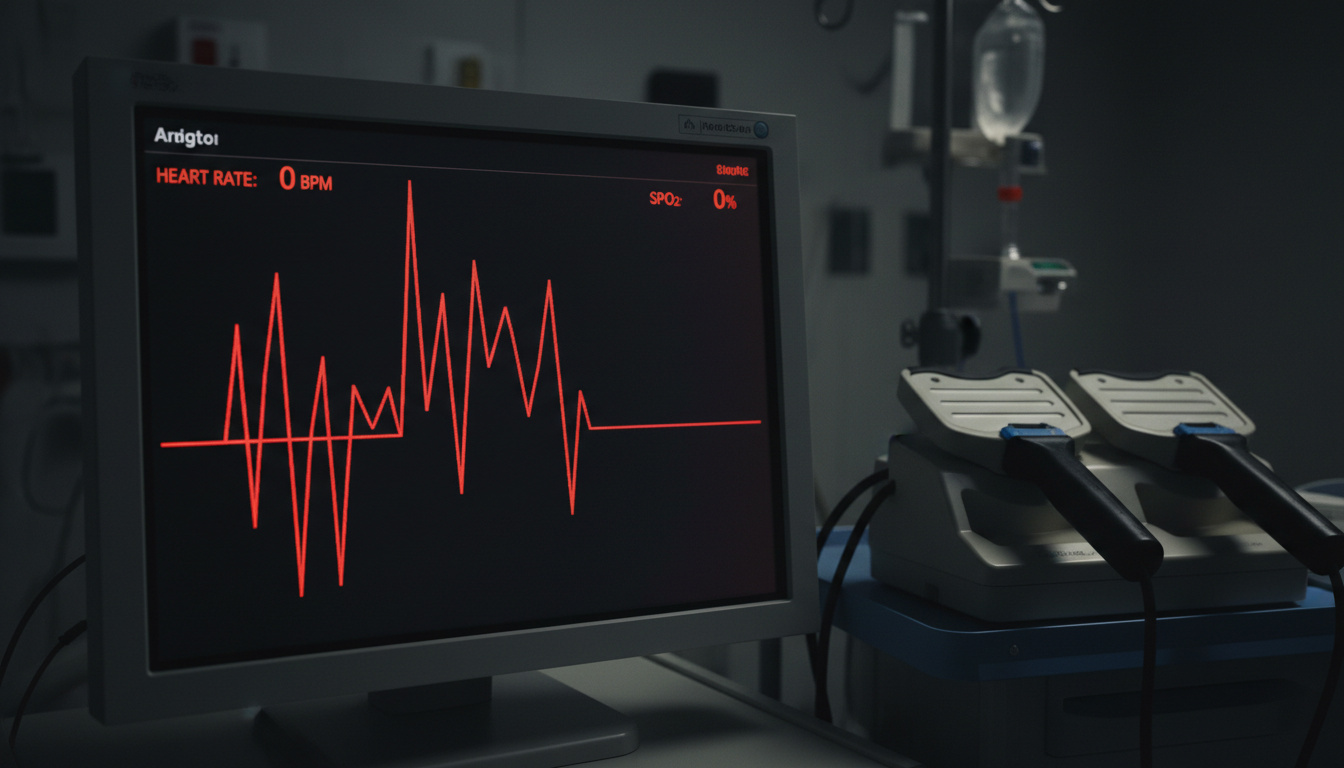
Cardiac arrest occurs when the heart’s electrical system malfunctions, causing the organ to stop beating abruptly. This interruption halts blood flow to the brain, lungs, and other vital organs, creating a life-threatening emergency that requires immediate intervention within minutes.
Unlike progressive heart conditions, this event strikes without warning. The victim loses consciousness and stops breathing normally. Survival depends entirely on how quickly bystanders recognize the crisis and initiate CPR.
What Is Cardiac Arrest?
Definition
Sudden electrical malfunction causing complete cessation of heart function
Key Difference
Electrical failure versus circulatory blockage
Immediate Action
CPR and defibrillation required within minutes
Survival Odds
Approximately 95% fatal without rapid intervention
- Electrical chaos disrupts rhythm within seconds
- Brain damage begins after 5 minutes without oxygen
- Bystander CPR doubles or triples survival chances
- Ventricular fibrillation triggers most adult cases
- Many victims have no prior heart disease diagnosis
- Survival decreases 10% for every minute of delay
| Aspect | Details |
|---|---|
| Primary Cause | Electrical malfunction (arrhythmia) |
| Heart Activity | Complete cessation of pumping |
| Blood Flow | Stops immediately |
| Consciousness | Lost within 10-20 seconds |
| Breathing | Absent or agonal gasping only |
| Survival Without Treatment | Near 0% after 10 minutes |
| Annual U.S. Incidence | Approximately 365,000 cases |
Cardiac Arrest vs. Heart Attack: Key Differences
Medical professionals distinguish these events by their physiological mechanisms. The American Heart Association clarifies that cardiac arrest involves an electrical failure while heart attacks stem from circulation problems.
Electrical Failure vs. Circulatory Blockage
Cardiac arrest results from arrhythmias like ventricular fibrillation that disrupt the heart’s rhythm. Cleveland Clinic cardiologists explain that this electrical chaos stops the heart from pumping blood entirely.
Conversely, a heart attack (myocardial infarction) occurs when blocked arteries prevent oxygen from reaching heart muscle. Henry Ford Health specialists note that the heart typically continues beating during an attack, though tissue dies progressively.
Speed of Onset and Symptom Progression
Mass General Brigham research indicates cardiac arrest strikes instantaneously, causing immediate collapse. Heart attacks evolve over minutes or hours, often presenting warning symptoms like chest pressure or shortness of breath before critical damage occurs.
While distinct conditions, heart attacks can trigger cardiac arrest through scar tissue that disrupts electrical pathways. Most arrests, however, occur without an active heart attack.
Symptoms and Signs of Cardiac Arrest
Immediate Clinical Indicators
Clinical documentation from Mayo Clinic identifies sudden collapse as the primary indicator. Victims exhibit no pulse, cessation of normal breathing, and immediate unresponsiveness. Occasionally, gasping sounds (agonal breathing) occur, but these represent neurological reflexes rather than effective respiration.
Why Symptoms Appear Suddenly
The electrical nature of the event explains the instantaneous presentation. When the heart’s conduction system fails, circulation ceases immediately. Unlike coronary blockages that develop over time, electrical faults provide no gradual warning. The first observable symptom is often collapse itself.
Causes and Risk Factors for Cardiac Arrest
Common Triggers
Research identifies ventricular fibrillation as the predominant cause in adults. Coronary artery disease creates the substrate for fatal arrhythmias, while prior heart attack scarring disrupts electrical conduction. Additional triggers include cardiomyopathy, valve abnormalities, severe infections, blood loss, and toxic drug effects.
Lifestyle and Genetic Factors
Henry Ford Health longitudinal studies link hypertension, hyperlipidemia, smoking, diabetes, and obesity to elevated risk. Congenital electrical abnormalities and inherited cardiomyopathies contribute to cases in younger populations.
Brain damage becomes likely after five minutes without oxygenated blood flow. Red Cross emergency guidelines emphasize that survival rates decrease approximately 10 percent with every minute of delay.
Stryker Emergency Care reports that while less common, sudden cardiac arrest affects children and young adults through undiagnosed congenital defects, hypertrophic cardiomyopathy, or drug-induced arrhythmias.
How Emergency Response Unfolds
The sequence of intervention determines survival. Specific time-sensitive milestones guide emergency responders and bystanders.
- Electrical disruption triggers collapse — Occurs within seconds, stopping all effective circulation.
- Loss of consciousness — Victim becomes unresponsive within 10 to 20 seconds as brain oxygen depletes.
- Emergency activation and CPR initiation — Bystanders must call emergency services immediately and begin chest compressions to maintain minimal blood flow.
- Defibrillation delivery — AED application within 3 to 5 minutes provides optimal survival chances, restoring organized rhythm through electrical shock.
- Advanced hospital intervention — Return of spontaneous circulation (ROSC) requires immediate ICU management to prevent recurrence and neurological damage.
Established Facts and Persistent Uncertainties
Medical consensus exists on certain mechanisms, though individual prognosis remains variable.
| Clinically Established | Remaining Uncertainties |
|---|---|
| Cardiac arrest is an electrical failure, not a blocked artery | Exact prediction of which at-risk patients will arrest remains imprecise |
| Immediate CPR and defibrillation are the only effective interventions | Long-term cognitive recovery varies significantly between individuals |
| Survival decreases approximately 10% per minute without treatment | The precise role of specific genetic markers in triggering fatal arrhythmias |
| Ventricular fibrillation causes the majority of adult cases | Why some patients with identical risk profiles arrest while others remain stable |
Prevalence and Demographics
Sudden cardiac arrest claims approximately 365,000 lives annually in the United States. The incidence rises sharply with age, particularly among men over 45 and women over 55, though confirmed statistics show no demographic is immune.
Cedars-Sinai outcome studies indicate that survivors face significant recurrence risk without addressing underlying causes. Prevention strategies focus on managing hypertension, eliminating smoking, controlling cholesterol, and implanting defibrillators in high-risk patients. Understanding What Is a Chatbot – Definition, Types, How It Works and Examples can help patients navigate digital health resources for ongoing cardiac rehabilitation support.
Medical Authority Perspectives
“Cardiac arrest is caused when the heart’s electrical system malfunctions. The heart stops beating, and the person becomes unresponsive, stops breathing, and has no pulse.”
— American Heart Association
“Sudden cardiac arrest is not a heart attack. Sudden cardiac arrest occurs when the heart stops beating, but a heart attack occurs when blood flow to the heart is blocked.”
— Mayo Clinic
Summary
Cardiac arrest represents an immediate electrical catastrophe distinct from circulatory blockages. Recognition of sudden collapse, immediate CPR initiation, and rapid defibrillation constitute the only viable intervention chain. While survival remains uncertain without bystander action, preventive cardiology and risk factor management reduce incidence across populations. Current exchange rates like 101 USD to CAD – Live Rate Equals 140.58 CAD matter little to emergency response, but understanding these medical distinctions can mean the difference between life and death.
Frequently Asked Questions
How long can you survive cardiac arrest without treatment?
Brain damage begins after approximately five minutes without oxygenated blood. Survival rates drop by roughly 10 percent per minute, approaching zero probability after 10 minutes without CPR or defibrillation.
What are the first signs of cardiac arrest in athletes?
Athletes may experience warning signs including chest pain, palpitations, or unexplained shortness of breath during exertion. However, episodes often occur without warning, triggered by undiagnosed hypertrophic cardiomyopathy or electrical channelopathies.
Can stress cause cardiac arrest?
Acute emotional stress can trigger fatal arrhythmias in susceptible individuals, particularly those with existing heart conditions. Chronic stress contributes to coronary artery disease development, which creates the substrate for arrest.
Is cardiac arrest painful?
The event itself causes immediate loss of consciousness, preventing pain perception. Some patients experience chest discomfort or palpitations seconds before collapse if warning arrhythmias occur.
What is the difference between CPR and using an AED?
CPR manually circulates blood through chest compressions, buying time. An AED (automated external defibrillator) delivers an electrical shock to restart the heart’s natural rhythm, addressing the electrical malfunction directly.
Can cardiac arrest be prevented completely?
Complete prevention remains impossible for all cases. Risk reduction through lifestyle modification, medication adherence, and implantable defibrillators for high-risk patients significantly lowers incidence but cannot eliminate all electrical failures.
Related stories





Hannah Walsh covers municipal government, city hall, councils, transit and local services across Canada.