
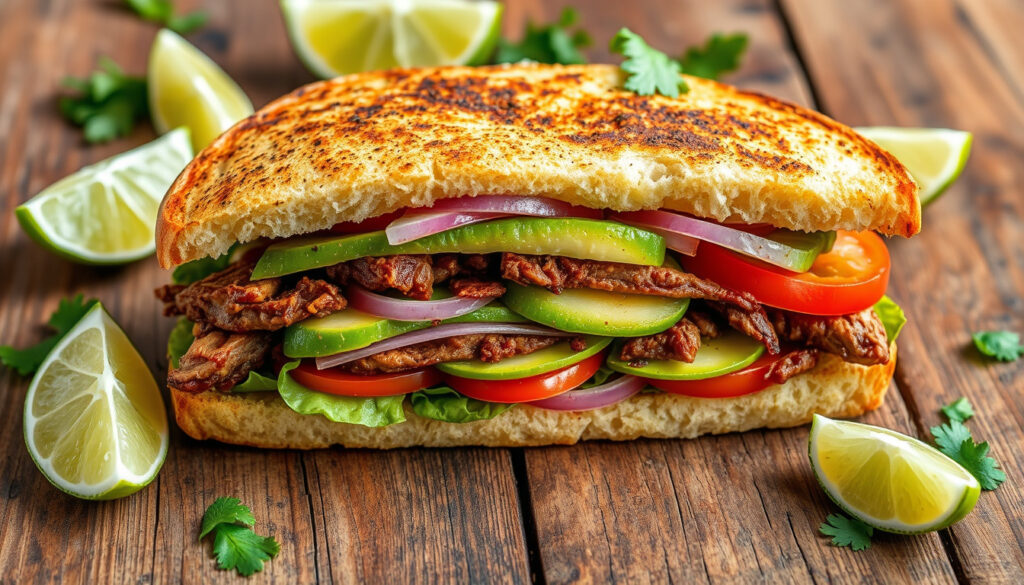
What Is a Torta?
A Mexican torta is a hearty, hot sandwich made on a soft yet crusty roll like telera or bolillo bread, filled with meats, beans, avocado, vegetables, cheeses, and sauces, often grilled or pressed for melted flavors. Unlike “torta” meaning cake in Spain or South America, in Mexico the term strictly denotes this substantial sandwich. Tortas are Mexico’s portable street food staple, served warm and customizable for any meal, distinct from cold deli sandwiches due to their grilled preparation and generous fillings.
The bread—telera (oval, wider than a baguette with a slit) or bolillo (shorter, rounded with a crunchy crust and soft interior)—is typically toasted to achieve the perfect balance of texture. This specific bread holds up remarkably well against the moist fillings, preventing sogginess while adding its own distinct flavor to each bite.
Overview Grid
Key Insights
- Portable street food designed for eating on the go, popular at markets and street vendors
- Versatile fillings allow customization for any taste preference or dietary need
- Telera bread is essential—without it, the sandwich is not a true torta
- Always served hot, typically grilled or pressed to melt cheeses and warm fillings
- Popular throughout Mexico City and expanding in taquerias across the United States
- 14 or more regional variations exist, each with unique ingredient combinations
- Distinct from cemita and standard sandwiches through bread type and preparation
Snapshot Facts
| Fact | Detail |
|---|---|
| Type | Mexican sandwich |
| Bread | Telera or bolillo |
| Common Fillings | Carnitas, milanesa, avocado |
| Preparation | Hot, grilled or pressed |
| Serving Style | Handheld, portable |
| Origin Influence | 19th century French baguettes |
| Regional Styles | 14+ varieties documented |
What Makes a Torta Different from Other Sandwiches?
The distinction between a torta and other sandwiches goes beyond mere ingredients. Several key factors set this Mexican creation apart, making it a unique culinary experience that differs significantly from subs, wraps, or European-style sandwiches.
Understanding the Differences
The preparation method alone separates tortas from most Western sandwiches. While a typical submarine sandwich might contain cold cuts and vegetables served at room temperature, a torta is always served hot. The sandwich is typically placed on a grill or press after assembly, allowing the bread to develop a crispy exterior while the cheeses melt and the fillings warm through.
The grilled or pressed preparation method is what truly defines a torta. This step, called “torteando” in Mexico, transforms a simple assembly of ingredients into a cohesive, heated sandwich with melted textures and enhanced flavors.
The bread itself represents another fundamental difference. Standard sandwiches rely on sliced bread, ciabatta, or baguette halves. Tortas require either telera or bolillo—specific Mexican rolls with characteristics that handle the grilled preparation and hearty fillings without becoming soggy. The telera features a distinctive oval shape with a slit along the top, while bolillo resembles a shorter, fatter baguette with a satisfying crunch on the outside.
Torta vs. Cemita
While tortas and cemitas share similarities—both are Mexican hot sandwiches with generous fillings—they differ in important ways. The cemita poblana, originating from Puebla, uses a sesame seed-topped roll and typically includes meat, cheese, papaya, and herbs like papalo. These elements create a flavor profile distinct from the traditional torta, which relies more heavily on beans, avocado, and various salsas.
Tortas use telera or bolillo bread with meats, beans, and avocado. Cemitas use sesame rolls with cheese, papaya, and herbs. Both are hot and handheld, but the bread and ingredient profiles create distinctly different experiences.
Comparison Table
| Feature | Mexican Torta | Cemita | Standard Sandwich | Burrito |
|---|---|---|---|---|
| Bread | Telera/bolillo (crusty, soft) | Sesame roll | Sliced bread | None (tortilla wrap) |
| Preparation | Hot, grilled/pressed | Hot, layered | Often cold | Wrapped, sometimes grilled |
| Fillings | Meats, beans, avocado, chiles | Meat, cheese, papaya, herbs | Deli meats, cold cuts | Meats, rice, beans in tortilla |
| Style | Open-faced layers, handheld | Poblano stack | Simple stack | Wrapped bundle |
Key Ingredients in a Traditional Torta
The beauty of a torta lies in its customizable nature, but traditional versions follow certain conventions that have made this sandwich iconic throughout Mexico. Understanding the role of each component helps appreciate why these sandwiches have become so beloved.
The Foundation: Bread Types
The bread serves as more than a vessel—it provides structural integrity, texture contrast, and flavor that anchors the entire sandwich. Telera remains the most traditional choice, featuring a flat-oval shape with a soft interior and crusty exterior that makes it ideal for layering multiple ingredients.
Bolillo offers an alternative that some prefer for its more pronounced crunch. Shaped like a shorter, fatter baguette, it provides a satisfying bite with its crunchy crust giving way to a soft center. Regional variations might use birote salado—a sourdough style bread—for specific preparations like the torta ahogada, or sesame rolls for cemita-style variations.
Proteins and Meats
The protein selection defines many torta variations, with several options standing out as particularly popular. Carnitas—slow-cooked, seasoned pork—represents one of the most beloved choices, offering tender, flavorful meat that melts in the mouth. Milanesa, a breaded and fried cutlet made from pork, chicken, or beef, provides a crispy contrast to the soft bread.
Other common meat options include barbacoa (slow-cooked lamb), chorizo (spicy Mexican sausage), ham, pulled pork, and steak. Some specialty versions like the torta cubana combine multiple proteins—pork, ham, and chorizo—creating an especially substantial sandwich. The tripleta, another popular variation, typically stacks braised beef, pork, and chicken together.
Traditional assembly starts with spreading refried beans on both halves of the bread for structure and moisture protection. The protein goes next, followed by cheese that will melt during grilling, then avocado slices, fresh vegetables, pickled jalapeños, and finally salsa to add heat and brightness.
Toppings and Accompaniments
The toppings transform a simple protein-and-bread combination into a complex flavor experience. Avocado or crema adds creaminess that balances the savory elements, while pickled jalapeños bring acid and heat. Fresh lettuce, tomatoes, onions, and cilantro contribute crunch and brightness.
Cheese choices typically include Oaxaca cheese—a stringy, mild cheese that melts beautifully—or queso fresco for a tangier, crumblier texture. Salsas, both red and green, provide customizable heat levels, while spicy mustard adds another layer of flavor that many traditional preparations include.
History and Origins of the Torta
The torta’s story reflects the broader culinary history of Mexico, incorporating influences from European baking traditions while maintaining distinctly Mexican characteristics. This evolution spans centuries and involves cultural exchanges that shaped the sandwich we know today.
Evolution from French Influences
French baguette culture arrived in Mexico during the 19th century, particularly through the influence of Austrian and French bakeries that established operations in Mexican cities. These bakeries introduced techniques and bread styles that Mexican bakers adapted for local tastes and ingredients.
The adaptation process transformed the French baguette into local varieties like bolillo, which maintained some of the original’s characteristics while developing a shorter, fatter shape better suited to Mexican portion sizes and consumption habits. This hybridization created the perfect bread for holding generous sandwich fillings.
Regional Development
While tortas developed throughout Mexico, certain cities became associated with specific variations that showcase regional ingredients and preferences. Guadalajara claims the iconic torta ahogada, which translates to “drowned torta”—a name that references its signature preparation of dunking the assembled sandwich in a spicy chile de árbol and tomato sauce.
Puebla developed its own traditions, including chanclas poblanas—chorizo, avocado, and red guajillo salsa served on sandal-shaped bread, typically sold in pairs. These regional specialties demonstrate how the basic torta concept has been adapted to showcase local flavors and culinary preferences across different parts of Mexico.
Regional Variations and How to Enjoy a Torta
With 14 or more documented regional styles, exploring different torta variations offers a journey through Mexican culinary geography. Each region has developed its own interpretation, often using local ingredients and reflecting community preferences that have been refined over generations.
- 19th Century French Influence: French baking techniques and bread styles introduced to Mexico, beginning the adaptation process that would eventually produce bolillo and telera.
- Street Food Evolution: Mexican vendors began assembling sandwiches using local breads and regional ingredients, creating portable meals for workers and travelers.
- Regional Specialization: Cities like Guadalajara and Puebla developed signature variations that emphasized local ingredients and flavors, establishing the diversity of torta styles.
- 20th Century Expansion: Tortas became a Mexico City staple, with specialized tortelerias opening to serve the growing demand for this affordable, filling meal.
- Modern Global Spread: Immigration and food culture interest brought tortas to the United States and beyond, where they continue gaining popularity in taquerias and food trucks.
Popular Regional Styles
The torta ahogada from Guadalajara stands as perhaps the most dramatically different variation, featuring carnitas piled into birote salado bread, then drowned—either partially or completely—in a chile de árbol and tomato sauce. The bread soaks up this spicy liquid, creating an experience quite different from a standard torta.
The torta de milanesa offers a crispy alternative, featuring a breaded and fried cutlet as the primary protein. Topped with lettuce, tomato, avocado, and jalapeños, with optional beans or salsa, it provides textural contrast that many find irresistible. International fusions have also emerged, including the banh mi-torta hybrid that combines Vietnamese and Mexican influences. For more information on this topic, check out ugnsomelett med grädde.
How to Eat a Torta
Eating a torta is an unapologetically messy experience that rewards the adventurous eater. The proper approach involves simply grabbing the sandwich with both hands and taking a bite, accepting that some filling may escape. In Mexico, this handheld meal is commonly eaten on the street, at soccer games, or from food vendors.
A squeeze of lime over the sandwich adds brightness that many prefer, cutting through the richness of the meats and cheese. Tortas pair naturally with salsa and chips, and many vendors serve them with these accompaniments. The complete experience combines flavors, textures, and a certain informality that reflects the street food origins of this beloved sandwich.
Understanding What Makes a Torta Authentic
For those seeking an authentic experience, understanding what constitutes a genuine torta versus a sandwich inspired by torta culture helps set appropriate expectations. Several characteristics define authenticity, while some common beliefs warrant closer examination.
Authentic tortas are made with telera or bolillo bread, served hot, assembled with refried beans, a protein, cheese, avocado, and various toppings. They are grilled or pressed after assembly. These elements represent the core characteristics that define a true torta across Mexican regions.
| Established Information | Information That Remains Unclear |
|---|---|
| Uses telera or bolillo bread | Exact invention date or first torta location |
| Always served hot and grilled | Which region first created the concept |
| Influenced by French baking traditions | Precise origin story of specific regional variations |
| Refried beans are traditional base | Who first combined these specific ingredients |
| Multiple regional styles exist | Complete list of all regional variations |
Some believe any Mexican sandwich qualifies as a torta. In reality, the specific bread type, hot preparation, and traditional ingredient combinations define authentic tortas. Cold sandwiches or those on standard sliced bread do not meet these criteria.
The Cultural Role of Tortas in Mexican Cuisine
Tortas occupy a special place in Mexican food culture, representing an intersection of convenience, flavor, and tradition that few other dishes achieve. As a portable street food, it has long served workers and families seeking filling meals without the need for tables or utensils.
The versatility of the torta contributes to its enduring popularity. A single concept accommodates everything from simple, affordable versions at street carts to elaborate specialty sandwiches at dedicated tortelerias. This adaptability has allowed the dish to remain relevant through changing times while maintaining its essential character.
For those exploring Mexican culinary traditions, learning about Mexican street food culture provides valuable context for understanding how tortas fit into the broader landscape of traditional cuisine. The sandwich reflects practical wisdom about nutrition, convenience, and flavor that has been refined over generations.
What Experts Say About Tortas
Food historians and culinary experts recognize the torta as representing a significant chapter in Mexican culinary development. The adaptation of European bread traditions into something distinctly Mexican demonstrates the creative synthesis that characterizes much of Mexican cuisine.
The torta represents how Mexican cuisine took foreign influences and made them entirely its own. The combination of French bread techniques with local ingredients and preparation methods created something that feels fundamentally Mexican, even though its roots include European elements.
Culinary traditions continue evolving, with contemporary chefs finding new ways to honor torta fundamentals while exploring creative variations. Mexican recipe collections often include torta variations that range from traditional preparations to modern interpretations that incorporate international flavors.
The genius of the torta lies in its structural engineering. The bread, the bean layer, the protein, the toppings—each element serves a purpose in creating a handheld meal that holds together while delivering complex flavors in every bite.
Summary
A Mexican torta is a distinctive hot sandwich that sets itself apart through specific bread types, grilled preparation, and generous layers of traditional Mexican ingredients. Originating from the adaptation of French baking techniques in 19th-century Mexico, the torta has evolved into a beloved street food with over a dozen regional variations, from Guadalajara’s drowned torta ahogada to Puebla’s chanclas poblanas. The combination of telera or bolillo bread, refried beans, various proteins like carnitas or milanesa, cheese, avocado, and salsas creates a portable yet substantial meal that reflects the creativity and practicality of Mexican culinary tradition. Understanding these fundamentals helps appreciate why this sandwich remains a cornerstone of Mexican cuisine, whether enjoyed from a street vendor in Mexico City or at a tortaeria stateside. For those curious about other culinary distinctions, see our comparison of similar topics that explore specialized knowledge in various fields.
Frequently Asked Questions
Why is it called a torta?
In Mexico, “torta” refers specifically to this hot sandwich, differing from Spain or South America where “torta” means cake. The Mexican usage likely evolved as French baguette-style breads were adapted for local sandwiches, with the bread itself eventually lending its name to the completed dish.
Can tortas be vegetarian?
Yes, vegetarian tortas are common and delicious. Instead of meat proteins, fillings might focus on grilled vegetables, beans, cheese, and avocado. The bean spread remains a traditional base, and the hot grilled preparation ensures these meatless versions still deliver the characteristic torta experience.
What drink pairs with a torta?
Traditional pairings include agua fresca varieties like horchata or Jamaica, Mexican soft drinks such as Jarritos, or a refreshing limeade. For those seeking something more substantial, Mexican hot chocolate or café de olla provide warming companions to the hearty sandwich.
Is a torta a sandwich?
Technically, yes—a torta fits the broad definition of a sandwich as bread with fillings. However, it differs from typical sandwiches through its specific bread type, hot grilled preparation, and the particular combination of Mexican ingredients. Some argue it represents a distinct food category with its own traditions.
Where can I find authentic tortas outside Mexico?
Authentic tortas appear increasingly in cities with significant Mexican populations, particularly in the United States. Look for dedicated tortelerias, Mexican taquerias with torta menus, or food trucks specializing in Mexican street food. Quality varies, so seeking recommendations from those familiar with traditional preparations helps ensure an authentic experience.
What bread is used for a torta?
Telera and bolillo represent the traditional choices. Telera features an oval shape with a characteristic slit and offers a soft interior with a slightly crusty exterior. Bolillo resembles a shorter, fatter baguette with a more pronounced crunch. Regional variations might use birote salado for specific styles like torta ahogada.
How did the torta originate?
The torta evolved from 19th-century Mexican street food culture, influenced by French baguette traditions introduced during that period. Mexican bakers adapted these European breads into local varieties, and vendors began assembling them with traditional Mexican fillings. Regional variations developed over time, creating the diverse torta landscape we see today.
Related stories




Hannah Walsh covers municipal government, city hall, councils, transit and local services across Canada.