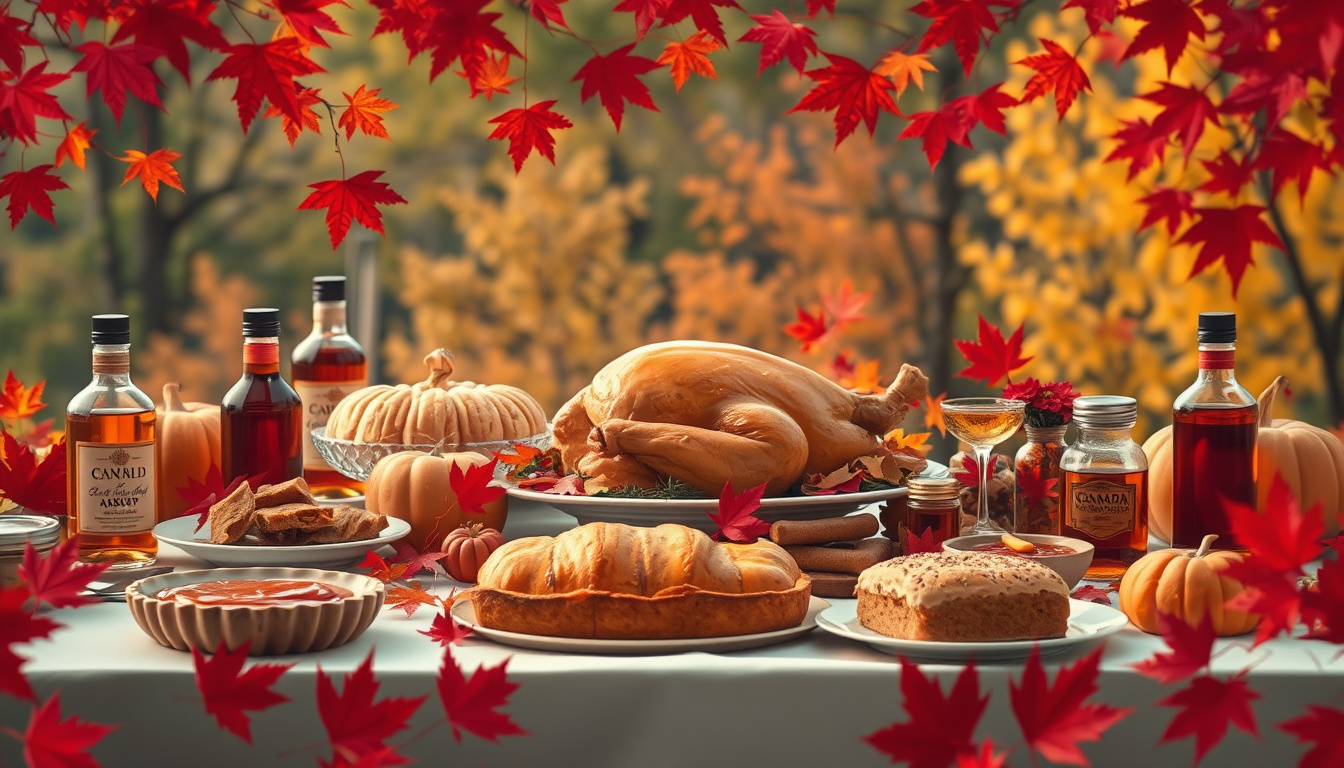
Most people know Thanksgiving as an American thing—that November feast with parades and Black Friday sales. But Canada’s been doing it differently for centuries, holding its celebration weeks earlier in October. The reason goes straight to the root of what Thanksgiving actually is: a harvest holiday shaped by a shorter, colder growing season farther north.
Date: Second Monday in October · First official celebration: November 6, 1879 · Stat holiday since: 1957 · Primary focus: Harvest gratitude · Key difference from US: Earlier due to northern latitude
Quick snapshot
- Canada’s Thanksgiving traces to 1578—43 years before the Pilgrims’ 1621 Plymouth feast (Trafalgar Tours)
- National statutory holiday since January 31, 1957 (Palme School)
- Details on specific Indigenous harvest celebrations before European contact remain sparse in official records
- Precise participation rates for Black Friday shopping in Canada are not consistently tracked
- 1578: First Canadian Thanksgiving (Martin Frobisher, Newfoundland) → 1879: National holiday formalized → 1957: October date locked in
- 2026 Canadian Thanksgiving falls on October 12 (Palme School)
| Label | Value |
|---|---|
| Official Name | Thanksgiving Day |
| Year Fixed | 1957 |
| First Annual | 1879 |
| Stat Holiday | National |
Why is Canadian Thanksgiving different?
The most visible difference is timing. While Americans gather on the fourth Thursday in November, Canadians celebrate on the second Monday of October—roughly a month earlier. This gap isn’t arbitrary. Canada sits farther north, which means the harvest season ends earlier. Crops come out of the ground sooner before frost sets in, so Thanksgiving follows the growing calendar rather than mirroring the American date.
Date and timing
Canada’s Thanksgiving falls on the second Monday of October. For 2026, that means the statutory holiday lands on October 12. The US, by contrast, holds its celebration on the fourth Thursday of November, creating a four-to-five-week gap between the two holidays in most years.
This difference traces to geography and the agricultural calendar. “Canadians have a shorter agricultural season due to being farther north,” noted one comparison of the two holidays. The earlier date reflects when northern harvests actually wrap up rather than following a historical tradition from a more temperate climate.
Harvest focus vs US
The harvest connection runs deeper than timing. In Canada, Thanksgiving remains fundamentally about giving thanks for the season’s bounty. The United States version, over decades, evolved into a broader “family gratitude” holiday wrapped in sports viewings, parade spectacle, and retail kickoffs. Canadian gatherings tend to stay closer to the agricultural roots—”low-key with Monday off, family dinner on Sunday, fall walks, CFL games,” as one source described typical observances.
Cultural influences
The holiday absorbed influences from multiple streams. Indigenous peoples across what is now Canada held harvest celebrations long before European contact. Later arrivals—particularly British and French settlers—added their own traditions. The result is a uniquely Canadian blend that emphasizes gratitude without the commercial fanfare that now defines the American version. Notably, Quebec uses the French term Action de Grâce, and many in that province don’t observe the holiday at all, reflecting the province’s distinct cultural relationship to the occasion.
What day is the stat holiday for Thanksgiving in Canada?
Thanksgiving Day is a national statutory holiday across Canada, observed on the second Monday in October. For most workers, this means a guaranteed Monday off—though the scope varies by province. Some Atlantic provinces treat it as optional, meaning not all businesses close, and Quebec residents generally don’t observe it under that name.
Official date
The official date we know today traces to January 31, 1957, when Parliament locked in the second Monday of October as the permanent Thanksgiving celebration. This replaced an earlier arrangement where the date shifted between late October and early November. The 1957 decision standardized what had been a moveable feast into a predictable annual anchor.
For 2026 specifically, Canadian Thanksgiving will fall on October 12. In 2024, it was October 14. The floating Monday means some years the long weekend feels longer or shorter, but the statutory guarantee remains consistent for federally regulated industries.
Historical changes
Before 1957, the holiday moved around the calendar. The first documented Canadian Thanksgiving occurred in 1578 when English explorer Martin Frobisher held a celebration in Newfoundland—43 years before the Pilgrims’ famous 1621 Plymouth gathering. However, those early observances weren’t annual or nationally standardized. The holiday became a national fixture in 1879, initially set for November 6. It took another 78 years before Parliament settled on the October Monday we know today.
In one notable detour, 1872 saw a Canadian Thanksgiving on April 15 to honor the Prince of Wales’s recovery from illness—showing the holiday’s flexible nature before its harvest roots became dominant.
Provincial variations
Not every province treats Thanksgiving the same way. Atlantic Canada marks it as optional, so retail workers and some service employees may find themselves working through the long weekend. Quebec observes the holiday under its French name, Action de Grâce, with lower participation rates than the rest of the country. In several provinces, the holiday is technically a statutory observance, but enforcement and coverage vary depending on employment sector and provincial labor law.
Why do we celebrate Thanksgiving in Canada?
At its core, Canadian Thanksgiving exists because of the harvest. Before refrigeration, before global supply chains, Canadians depended entirely on what they grew and stored through winter. Gratitude for the season’s abundance wasn’t sentimental—it was survival. The holiday crystallized that collective relief into an annual moment of thanks, anchored to when the crops actually came in.
Origins
The earliest Canadian Thanksgiving predates the American version by nearly half a century. In 1578, English explorer Martin Frobisher held a ceremony in Newfoundland to give thanks for a successful Arctic expedition—this is often cited as the first North American Thanksgiving, though it wasn’t an annual event at that point. Fast-forward to 1879, when Parliament formalized November 6 as the first official annual Canadian Thanksgiving. The date shifted over the following decades before settling on its current October position in 1957.
Abraham Lincoln proclaimed a national Thanksgiving in the United States in 1863, but Canada had already established its own observance, making the Canadian version one of the world’s oldest continuing Thanksgiving celebrations—despite the date changes along the way.
Indigenous history
Indigenous peoples across what is now Canada held harvest celebrations for thousands of years before European contact. These ceremonies varied widely by nation and region, but shared the common thread of acknowledging the year’s bounty and strengthening community bonds. European settlers absorbed and adapted these traditions, gradually transforming Indigenous harvest practices into the October holiday we know today. The details of specific pre-colonial observances remain unclear in historical records, but the agricultural foundation clearly predates any European influence on the holiday.
Modern meaning
For most Canadians today, Thanksgiving means a long weekend, a family dinner, and little commercial pressure compared to the American version. There’s no equivalent to Macy’s parade or NFL marathons. The emphasis stays on the meal itself—turkey, stuffing, fall sides—shared with family, often on Sunday evening rather than Monday. The harvest connection persists, even if many Canadians now live in cities far from agricultural work. The holiday serves as a marker of fall’s arrival and a reason to gather before winter settles in.
Do Canadians celebrate Black Friday?
Yes, Canadians participate in Black Friday—but the relationship is awkward. Since Canadian Thanksgiving comes four weeks before the American version, the Black Friday shopping wave hits Canada at roughly the same time as or shortly after their own holiday weekend. This creates a compressed shopping season that retailers have embraced enthusiastically, even if the timing feels slightly off.
Adoption in Canada
Black Friday arrived in Canada as American retail chains expanded north and Canadian consumers sought deals during the pre-Christmas shopping window. Major retailers like Walmart, Best Buy, and Canadian Tire now run Black Friday sales starting as early as Thursday evening (Canadian Thanksgiving Thursday) through the weekend. The event has become one of the biggest shopping days of the year in Canada, generating significant revenue despite—or because of—the proximity to the earlier Canadian Thanksgiving.
Timing issues
The scheduling creates a peculiar overlap. American retailers traditionally start Black Friday promotions after their own Thanksgiving dinner on Thursday. Canadian stores, having just wrapped their Thanksgiving long weekend, face American advertising and online deals bleeding into Canadian consumers’ awareness before they’ve finished their own leftovers. Some Canadian shoppers delay major purchases until Black Friday deals appear, even if they celebrated Thanksgiving earlier. This pulls some spending away from the traditional family-gathering weekend and toward the discount-driven shopping event.
Retail impact
Canadian retailers participate fully in Black Friday, but without the cultural weight it carries in the US. “US Thanksgiving kicks off holiday shopping with Black Friday,” one source noted—the two events are intertwined in American culture. In Canada, they’re simply sequential. The commercial stakes matter for Canadian retail, particularly cross-border competition when the Canadian dollar is strong, but the holiday’s identity remains distinct from the shopping spectacle the US version has become.
What is a fun fact about Thanksgiving in Canada?
The most striking fun fact: Canada invented Thanksgiving in North America—43 years before the Pilgrims got around to it. When Martin Frobisher held his 1578 ceremony in Newfoundland, the settlers at Plymouth Colony were still 43 years away from their famous 1621 feast. This makes Canadian Thanksgiving the continent’s original harvest celebration, not an imitation of the American version.
Unique traditions
Several traditions set Canadian Thanksgiving apart. The emphasis on butter tarts, Nanaimo bars, and regionally specific dishes like tourtière (a meat pie popular in Quebec) gives Canadian tables a distinct character. Sweet potato preparations differ—Canadians are more likely to serve whipped sweet potatoes with Dijon mustard, while Americans typically top theirs with marshmallows. Bacon appears in more Canadian stuffings and side dishes than American recipes typically include.
There’s also no Canadian equivalent to the White House turkey pardon—a tradition exclusive to American Thanksgiving. Canadian families simply eat their turkey like everyone else.
Geographic reasons
The October timing isn’t just earlier—it’s genuinely tied to geography. Canada’s shorter growing season means harvests wrap up by late September or early October. Waiting until November would leave much of the fall produce frozen in the ground. By scheduling Thanksgiving in mid-October, Canadians align their holiday with actual agricultural reality. This makes the harvest theme more than symbolic—it’s a direct response to regional climate conditions that shape when food actually comes ready for storage.
Celebrity ties
While the US has its turkey pardoning celebrities and parade appearances, Canadian Thanksgiving flies under the media radar. There’s no Canadian equivalent to the Macy’s parade or nationally televised football games. The holiday remains a family affair, unmediated by entertainment spectacle. This relative quiet suits many Canadians—the holiday means gathering with family and eating well, without the pressure of a national performance.
The upshot: Canadian Thanksgiving offers a quieter alternative to its southern cousin’s spectacle. For families who value the meal, the gathering, and the harvest reflection over the retail and media pageantry, the Canadian version delivers exactly that.
| Aspect | Canada | United States |
|---|---|---|
| Date | Second Monday in October | Fourth Thursday in November |
| First celebrated | 1578 (Martin Frobisher, Newfoundland) | 1621 (Pilgrims, Plymouth) |
| National holiday established | 1879 (November 6) | 1863 (Lincoln proclamation) |
| Current date locked | 1957 (second Monday October) | 1941 (law set November date) |
| Holiday duration | Monday + weekend for many | Thursday, Friday + weekend |
| Commercial scale | Low-key, family-focused | Major retail + media spectacle |
| Key food differences | Butter tarts, tourtière, Dijon sweet potatoes | Sweet potato casserole with marshmallows, cornbread |
Confirmed facts
- Canada’s first Thanksgiving was 1578 (Martin Frobisher)
- Official national holiday since 1879
- Date fixed to second Monday October in 1957
- Regional holiday in Quebec (Action de Grâce)
- Harvest-focused, not commercially driven
What’s unclear
- Specific details of pre-colonial Indigenous harvest celebrations
- Exact participation rates for Black Friday shopping in Canada
Trafalgar Tours (Travel Guide)
While the US Thanksgiving is held on the fourth Thursday in November, Canada celebrates on the second Monday of October.
Western Financial Group (Financial Services)
The decision to move Thanksgiving one week earlier, to lengthen the holiday shopping season during the Great Depression.
Paysend (Payments Platform)
Canadians have a shorter agricultural season due to being farther north.
Canada’s 1578 Thanksgiving predates the American 1621 feast by 43 years—making the “Canadian imitation” narrative backwards. The shorter northern growing season, not cultural borrowing, explains the October timing.
For families planning cross-border travel or video calls, the four-week gap between holidays creates a practical window: Canadians finish their leftovers while Americans are still prepping their turkey. International gatherings need advance scheduling coordination.
For Canadians, the choice between observing a commercialized November spectacle or sticking with the homegrown October gathering is increasingly irrelevant—Black Friday deals now bleed across the border regardless. The real trade-off is whether to embrace the American retail rhythm or protect the quieter, harvest-focused character that makes Canadian Thanksgiving distinct. Most Canadian families choose the latter, and that’s worth preserving.
Related reading: Soupe Poulet et Riz · How to Get Rid of Bloating
northwoodmirror.com, paysend.com, madeincanadagifts.ca, cabo.villalaestancia.com
Canadian Thanksgiving in October highlights harvest gratitude sooner than the US version, with 2025-2027 dates guide offering precise 2025-2027 dates and key contrasts.
Frequently asked questions
When is Canadian Thanksgiving 2026?
Canadian Thanksgiving 2026 falls on Monday, October 12. The holiday always lands on the second Monday of October, so the date shifts annually.
Is Canadian Thanksgiving a big deal?
Compared to the American version, Canadian Thanksgiving is relatively low-key. It’s a statutory holiday and a family gathering occasion, but lacks the retail spectacle, televised sports, and parade tradition that define US Thanksgiving. Many Canadians treat it as a pleasant long weekend rather than a major cultural event.
What foods are typical for Canadian Thanksgiving?
The centerpiece is roast turkey with traditional sides: stuffing, gravy, mashed potatoes, and cranberry sauce. Canadian tables often include butter tarts or Nanaimo bars for dessert, tourtière in Quebec, and root vegetables. Sweet potato preparations typically use Dijon mustard rather than marshmallows.
How does Canadian Thanksgiving food differ from American?
Both holidays center on turkey, but side dish preferences diverge. Americans favor sweet potato casserole topped with marshmallows and cornbread; Canadians lean toward whipped sweet potatoes with Dijon, more bacon in stuffings, and regional favorites like butter tarts and Nanaimo bars instead of sweet potato-based desserts.
Are there parades for Thanksgiving in Canada?
Generally no. Unlike the Macy’s Thanksgiving Day Parade in New York or the Philadelphia Thanksgiving Day Parade, Canada has no major nationally recognized Thanksgiving parade tradition. Some cities may hold small local events, but nothing approaches the scale or media coverage of American parade traditions.
Can newcomers celebrate Thanksgiving in Canada?
Absolutely. Newcomers to Canada are warmly welcomed at Thanksgiving gatherings. The holiday’s core message—gratitude for abundance and community—translates across cultures. Many Canadian families happily invite new friends, colleagues, or neighbors to share a Thanksgiving dinner as a way of helping newcomers feel connected to their new home.
What is the history of Thanksgiving in Canada?
Canada’s first Thanksgiving occurred in 1578 when explorer Martin Frobisher held a ceremony in Newfoundland. It became a national holiday in 1879, initially on November 6. Parliament moved it to the second Monday in October in 1957. This makes Canadian Thanksgiving the continent’s oldest, predating the American 1621 Plymouth celebration by 43 years.
Related stories





Jessica Morin covers provincial policy, regional economics and public affairs across Canada.