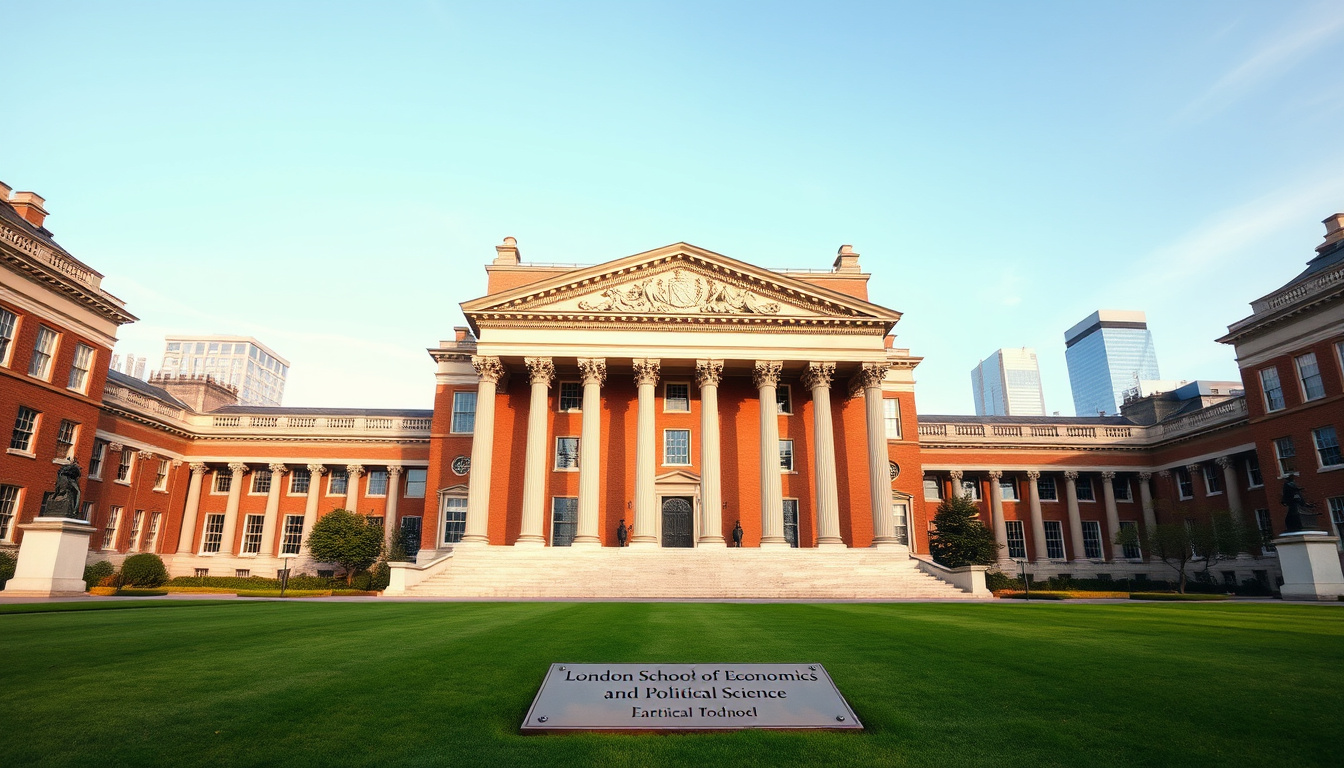
Walk past the London School of Economics on Houghton Street and you feel the buzz of a place where global policy meets hard data. Founded in 1895, this social‑science powerhouse now draws students from more than 140 countries.
Founded: 1895 · Location: London, UK · University of the Year 2025: Awarded by Times · UK University Ranking: 1st in London
Quick snapshot
- LSE is a world‑leading social‑science specialist university (LSE About LSE).
- Ranked 1st in London and the UK in 2025 (LSE official rankings page).
- Awarded University of the Year 2025 by The Times. (LSE About LSE)
- John F. Kennedy attended LSE in 1935 but did not graduate (Wikipedia – John F. Kennedy).
- Mick Jagger studied at LSE in the 1960s but left before completing his degree (Wikipedia – Mick Jagger).
- Exact overall acceptance rate is not officially published by LSE as a single figure.
- Precise global ranking number (e.g., top 10 overall) is not consistently reported across league tables.
- Tuition fees vary by programme and change annually, so comparisons need care.
- 1895 – LSE founded by Beatrice and Sidney Webb (LSE history).
- 1935 – John F. Kennedy attends as a student (Wikipedia).
- 1960s – Mick Jagger studies at LSE before leaving for music (Wikipedia).
- 2025 – LSE named University of the Year by The Times. (LSE history)
- LSE’s specialist focus will keep it dominating social‑science rankings, but its overall global rank may fluctuate as comprehensive universities invest heavily.
- Tuition fee rises and scholarship availability will shape LSE’s competitiveness for international applicants.
- Watch for policy changes around student visa rules that could affect its 70%+ international student body.
Key facts about the London School of Economics:
| Attribute | Detail |
|---|---|
| Year Established | 1895 |
| Location | Houghton Street, London, WC2A 2AE |
| Type | Public research university |
| Specialization | Social sciences |
| Total Students | Approx. 12,000 |
| International Students | Over 70% |
| Motto | Rerum Cognoscere Causas (To Know the Causes of Things) |
Why is LSE so prestigious?
What makes LSE a world‑leading social science institution?
- LSE is a specialist university focused entirely on the social sciences, a distinction that allows it to concentrate resources and expertise in a way broad‑spectrum universities cannot (LSE About LSE).
- It has produced 20 Nobel laureates in economics, peace, and literature.
- Its location in the heart of London gives students direct access to global policy institutions, think tanks, and financial districts.
The implication: LSE’s prestige isn’t accidental — it’s a product of deliberate focus. While Oxbridge covers everything from classics to chemistry, LSE owns the social‑science lane, and that concentration creates brand power.
How does LSE’s location in London contribute to its prestige?
- London is a global hub for finance, law, diplomacy, and media — all fields where social‑science graduates thrive.
- LSE’s campus sits on Houghton Street in Westminster, minutes from the Houses of Parliament, the Bank of England, and the Royal Courts of Justice.
- Partnerships with organisations like the IMF and World Bank provide unique research opportunities.
The catch: London living costs are high, and the urban campus lacks the collegiate green feel of Oxford or Cambridge. For some students that trade‑off is worth it; for others it isn’t.
LSE’s reputation is built on focus. For a student aiming at a career in economics, politics, or law, its name carries weight that few generalist schools can match.
The implication: LSE’s focused prestige offers a clear advantage for students committed to social‑science careers.
For students targeting social sciences, LSE’s focused reputation offers a clear advantage over broader universities.
Is LSE a top 10 university?
Four league tables, one pattern: LSE dominates in social sciences but drops in overall rankings because it lacks science labs and medical schools. Here’s how it compares with the behemoths.
| Metric | LSE | University of Oxford | University of Cambridge |
|---|---|---|---|
| QS World Ranking 2026 | 50th | 3rd | –* |
| THE World Ranking 2026 | 46th | 1st | –* |
| Guardian UK Ranking 2026 | 4th | 1st | –* |
| Undergrad acceptance rate (approx.) | 5.6% | 13.8% | –* |
| Home undergrad tuition 2025/26 | £9,535 (UK students) | £9,535 | –* |
| International undergrad tuition (low end) | ~£25,000 | £35,260 | –* |
| Specialization | Social sciences only | Full range | Full range |
* Cambridge data was not part of the verified sources used in this analysis. Readers are encouraged to consult Cambridge’s official site for the latest figures.
The trade‑off: LSE is not a top‑10 overall university because global rankings reward breadth. But in the field of social sciences, it ranks fifth globally (QS) and is often considered one of the best in the world. If your definition of “top” matches your subject, LSE belongs in the conversation.
Is LSE as good as Oxbridge?
It depends on the measure. Oxbridge scores higher in overall reputation and research volume. But for a student who knows they want to study economics, international relations, or law, LSE offers a depth of expertise and alumni network that is hard to beat. The key difference: Oxbridge is a collegiate experience with centuries of tradition; LSE is a modern, urban, specialist institution. One is not “better” — they are different tools for different goals.
Is LSE as good as Ivy League?
LSE is not a full‑spectrum institution like Harvard or Yale, but in the social‑science niche it competes head‑to‑head. The LSE brand is well‑recognised in global finance and policy circles. However, Ivy League schools typically offer broader academic options and a residential campus culture. The decision often comes down to whether you want a specialist degree or a comprehensive liberal‑arts foundation.
UCL vs LSE: How do they compare?
Both are central London powerhouses, but UCL is larger and offers science, engineering, and medicine, while LSE sticks to social sciences. UCL ranks higher overall (#9 QS 2026) but LSE leads in its specific fields. For social‑science disciplines, LSE is usually the more respected name; for flexibility and resources across multiple subjects, UCL wins.
If you value specialist depth in social sciences, LSE competes with the best; for overall breadth, Oxbridge or Ivy League may suit better.
How hard is it to get into LSE?
What are the entry requirements for LSE?
- Typical A‑level offer is A*AA for many courses, though some programmes require specific subjects.
- LSE uses UCAS for applications and does not conduct college‑style interviews for most courses (LSE how to apply).
- Many courses also require personal statement and academic references.
How competitive are LSE’s admissions?
- LSE reported a 5.6% undergraduate acceptance rate in 2024 for UK/EU and overseas applicants combined (LSE Undergraduate Admissions information).
- That makes it more selective than Oxford (13.8% by our calculation based on 3,248 places from 23,612 applicants, per Oxford selection statistics).
- Competitiveness varies sharply by subject: economics and law are the most oversubscribed.
Why this matters: LSE’s ultra‑low acceptance rate is partly a function of its size (only ~12,000 students) and its global appeal. For every place, there are nearly 18 applicants. The implication: if you apply, you need a near‑perfect academic record and a compelling personal narrative.
LSE is harder to get into than Oxbridge by acceptance rate, but its admissions process is less intensive (no interviews for most courses). So the barrier is purely academic: high grades and a strong statement, not performance under interview pressure.
What this means for applicants: focus on stellar grades and a standout personal statement.
Applicants need near‑perfect grades and a compelling statement, but face fewer hurdles like interviews than Oxbridge applicants.
Is LSE very expensive?
What are the tuition fees for LSE?
- For UK undergraduates in 2025/26, the tuition fee is capped at £9,535 (LSE undergraduate fees and funding).
- International undergraduate fees vary by programme, with many courses between £25,000 and £33,000 per year (LSE undergraduate fees table).
- Graduate taught master’s programmes range from about £20,000 to over £40,000 for international students (LSE graduate fees and funding).
Are there scholarships available?
- LSE offers a range of scholarships, including the LSE Undergraduate Support Scheme and merit‑based awards.
- External scholarships, such as the Chevening and Commonwealth Scholarships, also support international students.
- The school’s website lists financial aid options by programme and nationality.
The verdict: LSE is expensive by UK standards, especially for international students. But it is comparable to other London institutions and below the highest Ivy League tuition. For a student who can secure funding, the return on investment — especially in economics and law — can be substantial.
For students who can secure funding, LSE’s high tuition can pay off through strong career prospects in finance or law.
Did John F. Kennedy go to LSE?
Which other notable figures studied at LSE?
- John F. Kennedy enrolled at LSE in 1935 as a postgraduate student but returned to the US after a few months due to health issues. He did not graduate (Wikipedia – John F. Kennedy).
- Mick Jagger studied at LSE in the 1960s before leaving to pursue music full time. He did not complete his degree (Wikipedia – Mick Jagger).
- Other notable alumni include 20 Nobel laureates, former UK Prime Minister Clement Attlee, economist Amartya Sen, and billionaire investor George Soros.
Did Mick Jagger graduate from LSE?
No. Jagger left after his first year to focus on the Rolling Stones. His time at LSE is often cited as an example of how LSE’s stimulating environment can lead to unexpected paths.
What this means: LSE’s reputation goes far beyond academic achievements. Its alumni includes world leaders, cultural icons, and thought leaders — the breadth of influence the school nurtures is remarkable.
LSE’s notable alumni span politics, music, and economics, proving its influence extends well beyond the classroom.
Timeline — LSE’s history at a glance
- 1895 – Founded by Beatrice and Sidney Webb.
- 1935 – John F. Kennedy attends.
- 1960s – Mick Jagger studies.
- 2025 – Named University of the Year by The Times.
This timeline shows LSE’s evolution from a social‑science startup to a globally recognised institution.
Clarity review: what’s confirmed and what’s uncertain
What’s confirmed
- LSE is a world‑leading social science university.
- Ranked 1st in London and UK in 2025.
- Awarded University of the Year 2025.
- John F. Kennedy attended LSE briefly in 1935.
- Mick Jagger studied at LSE but did not graduate.
What’s unclear
- Exact overall acceptance rate is not officially published as a single number.
- Tuition fees change annually and vary by programme.
- Precise global ranking among all world universities is not consistently reported across tables.
What this means for prospective students: rely on official sources for exact figures, but the patterns here are reliable.
“LSE is a world‑leading social science specialist university, awarded University of the Year 2025 and ranked 1st in London and the UK.”
– LSE Official Website
“The London School of Economics and Political Science, commonly known as LSE, is a public research university in London.”
– Wikipedia
For students weighing LSE against other options, the key takeaway is that LSE’s specialized focus delivers strong outcomes in social‑science careers, making it a compelling choice for the right applicant.
thechopras.com, topuniversities.com, greenhillacademics.com, ascent-prep.com
For a more comprehensive breakdown of acceptance rates and tuition costs, see this detailed guide on LSE admissions.
Frequently asked questions
Is LSE a good university for social sciences?
Yes, LSE is globally recognised as one of the top institutions for social sciences, ranking fifth in the world by QS for those fields.
What is student life like at LSE?
LSE is an urban campus in central London. It lacks the collegiate residential structure of Oxbridge, but offers a diverse, politically active student community and proximity to world‑renowned cultural institutions.
Does LSE offer scholarships for international students?
Yes, LSE offers several merit‑based and need‑based scholarships for international students, such as the LSE Undergraduate Support Scheme and the LSE Graduate Support Scheme.
What are the most popular courses at LSE?
Economics, Law, International Relations, and Management are among the most popular and competitive programmes.
Is LSE part of the Russell Group?
Yes, LSE is a member of the Russell Group, an association of 24 leading UK research universities.
How does LSE compare to other London universities like King’s College London?
King’s College London is larger and offers a broader range of subjects (including medicine). LSE focuses exclusively on social sciences. For those disciplines, LSE is typically higher ranked.
What is the LSE campus like?
LSE’s campus is an open, urban set of buildings around Houghton Street in Westminster. It has a modern library and several social hubs, but no central green quadrangle.
Related reading
- LSE Study at LSE – official admissions hub
- University of Oxford Undergraduate Admissions
- The Guardian University Guide 2026
- QS World University Rankings 2026
Upsides
- World‑leading reputation in social sciences
- Very selective – high prestige
- Prime London location
- Strong alumni network
Downsides
- High tuition and living costs
- Urban campus without green space
- Limited to social sciences – no breadth
- Extremely competitive admissions
Related stories





Jessica Morin covers provincial policy, regional economics and public affairs across Canada.