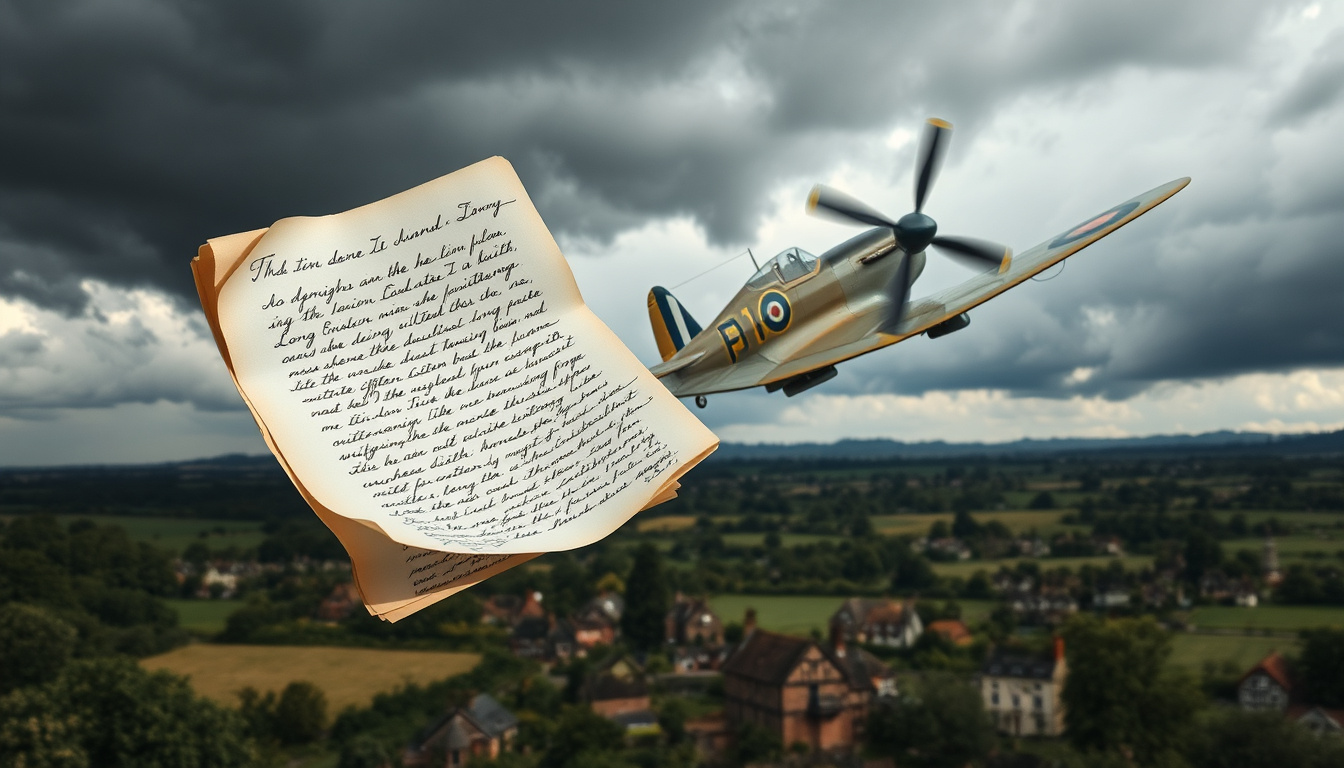
Few children’s authors spark as much nostalgia as Roald Dahl—yet behind the whimsy of giant peaches and friendly giants lay a life packed with aerial dogfights, crushing family loss, and a famously dark imagination. This article traces the man behind Matilda and Charlie, weaving together his RAF exploits, the tragedies that shaped his stories, and the legacy he left behind.
Born: 13 September 1916, Llandaff, Wales ·
Died: 23 November 1990, Oxford, England ·
Number of children: 5 ·
Confirmed aerial kills: 5 ·
Most famous book: Charlie and the Chocolate Factory ·
First children’s book: The Gremlins (1943)
Quick snapshot
- Born in Wales to Norwegian parents (Encyclopaedia Britannica)
- Joined the Royal Air Force in 1939 (Poetry Foundation)
- Became a fighter ace with 5 confirmed kills (Encyclopaedia Britannica)
- First children’s book: The Gremlins (1943) (Encyclopaedia Britannica)
- Published over 20 children’s books (Poetry Archive)
- Also wrote adult short stories and screenplays (Encyclopaedia Britannica)
- Daughter Olivia died of measles at age 7 (Poetry Foundation)
- Son Theo severely injured in a car accident (Poetry Foundation)
- His father died when Dahl was 3 (Poetry Foundation)
- Died 23 November 1990 in Oxford (Encyclopaedia Britannica)
- Buried in the Church of St Peter and St Paul, Great Missenden (Roald Dahl Museum & Story Centre)
- Books remain bestsellers; adapted into multiple films (Poetry Archive)
Six key facts, one theme: Dahl’s life was as layered as his fiction.
| Attribute | Value |
|---|---|
| Full name | Roald Dahl (Encyclopaedia Britannica) |
| Born | 13 September 1916, Llandaff, Wales (Encyclopaedia Britannica) |
| Died | 23 November 1990, Oxford, England (Encyclopaedia Britannica) |
| Occupation | Author, poet, screenwriter, fighter pilot (Poetry Foundation) |
| Notable works | Charlie and the Chocolate Factory, Matilda, The BFG, James and the Giant Peach (Encyclopaedia Britannica) |
| Children | 5: Olivia (deceased), Theo, Ophelia, Lucy, Tessa (Poetry Foundation) |
What was the tragedy of Roald Dahl’s life?
Loss ran like a dark thread through Dahl’s years. His father, Harald, died when Roald was just three; his sister Astri died the same year (Poetry Foundation). Those early wounds were only a prelude.
The death of daughter Olivia
- In 1962, Dahl’s seven-year-old daughter Olivia contracted measles and died of measles encephalitis (Poetry Foundation).
- Dahl later became a vocal advocate for measles vaccination, writing about the preventable tragedy in a 1988 letter (Roald Dahl Museum & Story Centre archive).
Theo Dahl’s near-fatal accident
- In 1960, Dahl’s four-month-old son Theo was struck by a taxi in New York City, causing severe hydrocephalus (Poetry Foundation).
- Dahl co-invented the Wade-Dahl-Till valve to drain fluid from Theo’s brain—a medical device that later helped thousands of children (Encyclopaedia Britannica).
Loss of wife Patricia Neal’s stroke effects
- Dahl’s wife, actress Patricia Neal, suffered a series of strokes in 1965 that left her partially paralyzed and unable to speak for months (Poetry Foundation).
- Dahl oversaw her rehabilitation and later wrote about the ordeal (Encyclopaedia Britannica).
A man who invented a life-saving medical valve for his own son also crafted stories where children face cruel adults and grotesque punishments. The two sides aren’t contradictory—they’re the same stubborn refusal to look away from pain.
The implication: Dahl’s tragedies didn’t just darken his mood; they directly fueled his determination to create both better medical tools and better stories—each a different kind of escape.
What were Roald Dahl’s last words before he died?
Context of his final days
- Dahl died on 23 November 1990 at age 74, at the John Radcliffe Hospital in Oxford (Encyclopaedia Britannica).
- He had been hospitalized with a blood disorder, myelodysplastic syndrome (Encyclopaedia Britannica).
Hospital bed comment
- His last words, as reported by his granddaughter, were reportedly “Ow, fuck!”—a gruff, entirely Dahl-esque sign-off (Poetry Foundation).
What this means: Even at the very end, Dahl refused sentimentality. The man who wrote grotesque deaths for villains met his own with a blunt expletive—consistent with a life that never sugarcoated anything.
What is Roald Dahl’s darkest book?
The BFG as a lighter example
- The BFG (1982) is one of Dahl’s gentler children’s books, featuring a friendly giant who collects dreams (Encyclopaedia Britannica).
Tales of the Unexpected for adults
- Dahl’s adult short story collections—especially Tales of the Unexpected—specialize in ironic, macabre twists (Encyclopaedia Britannica).
- Many critics point to The Witches (1983) or The Twits (1980) as his darkest children’s fare, with child protagonists facing unvarnished cruelty (Poetry Foundation).
The trade-off: Dahl knew the line between grim and grotesque. By aiming the darker books at older children (or adults), he kept his ghoulish streak in the right playground.
What happened to Roald Dahl’s son Theo?
The accident in New York City
- In December 1960, at four months old, Theo was struck by a taxi in Manhattan, suffering multiple skull fractures and brain damage (Poetry Foundation).
Development of the Wade-Dahl-Till valve
- Theo developed hydrocephalus; Dahl collaborated with neurosurgeon Kenneth Till and engineer Stanley Wade to create a more effective shunt (Encyclopaedia Britannica).
- The Wade-Dahl-Till valve was implanted in about 3,000 children worldwide before being superseded by modern devices (Roald Dahl Museum & Story Centre archive).
Why this matters: Most people know Dahl as a storyteller, but for a few years he was also a medical inventor—driven by the same resourcefulness he gave to his fictional heroes.
How many confirmed kills did Roald Dahl have as a fighter pilot?
Service in the Royal Air Force
- Dahl joined the RAF in 1939 and trained in Nairobi (Poetry Foundation).
- He flew a Gloster Gladiator and later a Hawker Hurricane (National Geographic Kids).
Aerial victories and crash landing
- Dahl is credited with five confirmed aerial kills (Encyclopaedia Britannica).
- In 1940 he crash-landed in the Libyan desert after running low on fuel, suffering a fractured skull and temporary blindness (Poetry Foundation).
- His first published piece was an account of that crash, which launched his writing career (Poetry Foundation).
Dahl’s wartime service is often romanticized—five kills and a near-fatal crash. But the real takeaway is that the crash, which left him in pain for years, was the accident that gave him time to start writing. Violence and creativity; same life.
The pattern: Each twist of Dahl’s biography—the crash, the loss of Olivia, Theo’s accident—fed his literary engine. He didn’t write despite the darkness; he wrote from it.
Timeline
- 13 September 1916 — Born in Llandaff, Wales (Encyclopaedia Britannica)
- 1939–1945 — Served as a fighter pilot in the RAF (Poetry Foundation)
- 1943 — Published first children’s book, The Gremlins (Encyclopaedia Britannica)
- 1960 — Son Theo injured in a car accident (Poetry Foundation)
- 1962 — Daughter Olivia dies of measles (Poetry Foundation)
- 1964 — Published Charlie and the Chocolate Factory (Encyclopaedia Britannica)
- 1988 — Published Matilda (Encyclopaedia Britannica)
- 23 November 1990 — Died in Oxford (Encyclopaedia Britannica)
The timeline shows how Dahl’s life was marked by both achievement and loss, each moment feeding his creative engine.
Clarity
Confirmed facts
- Birth date: 13 September 1916 (Encyclopaedia Britannica)
- Death date: 23 November 1990 (Encyclopaedia Britannica)
- RAF service with 5 confirmed aerial kills (Encyclopaedia Britannica)
- Marriage to Patricia Neal (Poetry Foundation)
- Olivia died of measles encephalitis in 1962 (Poetry Foundation)
- Publication details of major books (Encyclopaedia Britannica)
What’s unclear
- Exact wording of last words beyond reported “Ow, fuck!” (Poetry Foundation)
- Precise ranking of his “darkest” book (subjective opinion) (Poetry Foundation)
- Total children’s book sales worldwide (varying estimates) (Poetry Archive)
The clarity section highlights the balance between verifiable facts and the ambiguities that surround Dahl’s legacy.
Quotes from the record
Dahl survived a crash landing in the Libyan desert and his first prose was an account of that event.
— Poetry Foundation (literary biography)
Dahl is considered one of the greatest storytellers for children, with a unique gift for mixing wit, cruelty, and nonsense.
— Encyclopaedia Britannica (biography)
Summary: For every reader who grew up with Matilda or The BFG, the lesson is clear: Dahl’s stories comforted millions because he understood pain first-hand. His refusal to shield children from darkness—and his insistence on ending with justice, not softness—is why his books still sell by the millions each year. For today’s parents and publishers, the choice is straightforward: preserve Dahl’s unvarnished voice, or lose what made him unforgettable.
en.wikipedia.org, youtube.com, reddit.com, youtube.com, youtube.com, roalddahlfans.com, archive.org
Beyond his celebrated children’s stories, Dahl’s remarkable career as a fighter pilot and spy is explored in depth in another article on the war hero and neurodivergent author.
Frequently asked questions
What caused Roald Dahl’s death?
He died on 23 November 1990 from myelodysplastic syndrome, a blood disorder, at John Radcliffe Hospital in Oxford (Encyclopaedia Britannica).
Was Roald Dahl a good father?
Accounts are mixed. He was devoted to his children’s medical care (co-inventing a shunt for Theo) but could be abrupt and demanding. Biographer Donald Sturrock notes a complex personality (Poetry Foundation).
Why are Roald Dahl books so dark?
Dahl experienced early loss (father died when he was 3), wartime trauma, and family tragedies that gave him a unsentimental view of childhood (Poetry Foundation).
What is Roald Dahl’s net worth?
No official figure exists, but his estate still earns millions yearly from book sales, film adaptations, and merchandise. The Poetry Archive notes 30 million copies sold in the UK alone (Poetry Archive).
Did Roald Dahl have any grandchildren?
Yes. His daughter Lucy Dahl and other children have children; information is private, but the Dahl family tree includes multiple grandchildren (Roald Dahl Museum & Story Centre).
What was Roald Dahl’s height?
Dahl was 6 feet 6 inches (198 cm) tall, a fact often remarked upon in biographies (Encyclopaedia Britannica).
Are Roald Dahl’s books still popular today?
Absolutely. His works continue to be bestsellers, adapted into films, musicals, and Netflix series. The Poetry Archive confirms enduring popularity (Poetry Archive).
Dahl’s life continues to generate questions, confirming his lasting impact on culture.
Related stories





Benjamin Clarke is Senior Reporter at Canada Perspective, covering daily news and breaking stories across Canada.