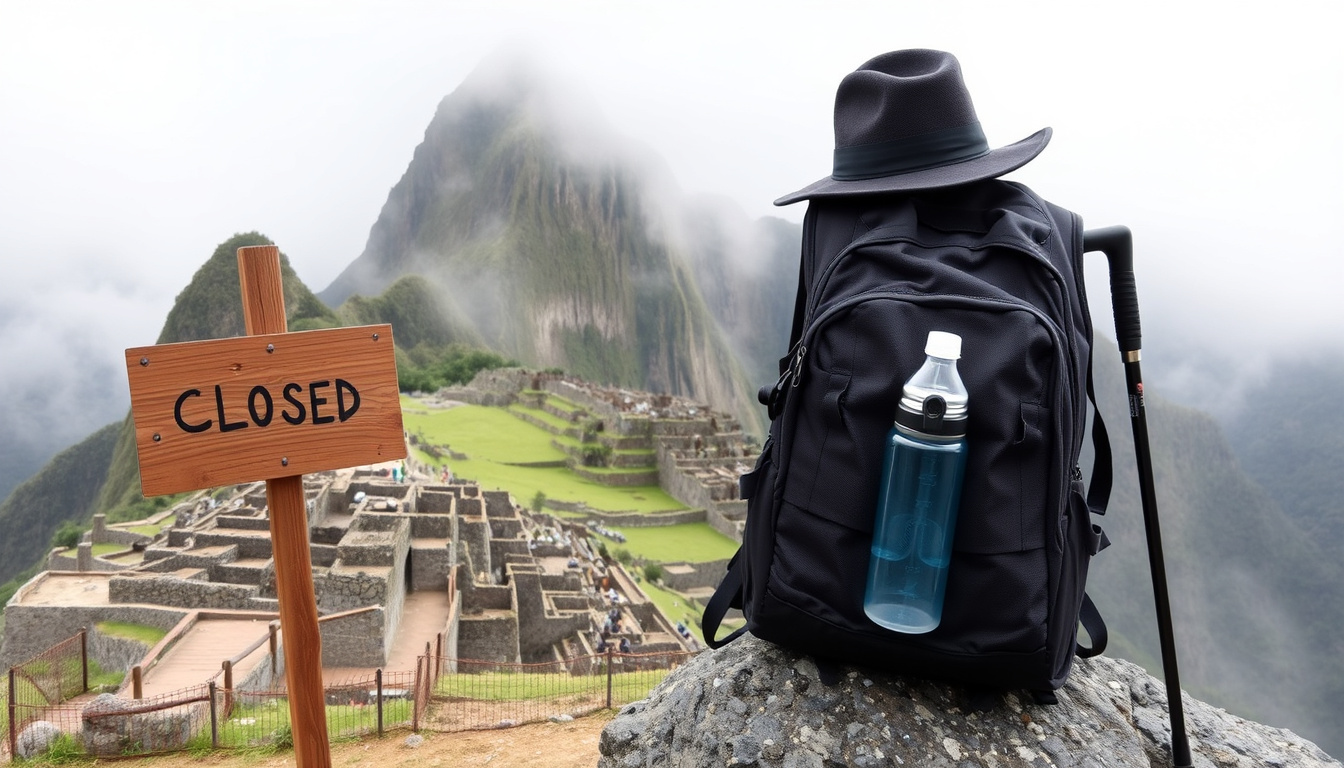
Perched nearly 2,430 meters above sea level, Machu Picchu is one of those rare places that feels both ancient and alive. Whether you’re planning a pilgrimage to the Inca citadel or just wondering if it’s safe to visit in 2026, this guide pulls together the latest rules, packing tips, and what to expect on the ground. By the end, you’ll know exactly what to pack, what to leave behind, and how to navigate the site’s changing regulations.
Altitude: 2,430 meters (7,970 ft) ·
Year built: 15th century (circa 1450) ·
UNESCO designation: 1983 ·
New 7 Wonder of the World: 2007 ·
Annual visitors: Approx. 1.5 million (pre-COVID) ·
Location: Eastern Cordillera, southern Peru
Quick snapshot
- 15th-century Inca citadel (Wikipedia (crowdsourced encyclopedia))
- UNESCO World Heritage site since 1983 (UNESCO (World Heritage organization))
- New 7 Wonder of the World (2007) (Worldometers (statistics portal))
- Whether Machu Picchu will fully close in 2026 remains unconfirmed by official sources.
- Exact new capacity limits for 2026 are not yet published.
- Specific health risks for seniors vary per individual.
- Whether the proposed capacity reductions will actually take effect in 2026 hasn’t been finalized.
- No official statement confirms temporary closures for maintenance in 2026.
- Individual altitude reactions differ; no universal risk profile exists.
- No confirmed full closure in 2026, but possible capacity reductions or new regulations are being discussed.
- Check official government sources for updates on 2026 entry rules.
The implication: nine key facts point to a site that blends archaeological wonder, strict conservation, and practical visitor logistics.
| Label | Value |
|---|---|
| Full name | Historic Sanctuary of Machu Picchu |
| Country | Peru |
| Altitude | 2,430 meters (7,970 ft) |
| Year built | Circa 1450 (15th century) |
| UNESCO World Heritage | 1983 |
| New 7 Wonder of the World | 2007 |
| Annual visitors | Approx. 1.5 million (pre-COVID) |
| Peak season | June–August |
| Low season | December–April |
The pattern: all nine facts point to a site that is simultaneously a world heritage treasure, a major tourist draw, and a fragile ecosystem that requires careful regulation.
Why is Machu Picchu famous?
What makes Machu Picchu a New 7 Wonder of the World?
- Built around 1450 as an Inca estate, Machu Picchu is a masterpiece of dry-stone construction that has survived centuries of earthquakes and weather (Wikipedia (crowdsourced encyclopedia)).
- In 2007, it was voted one of the New 7 Wonders of the World in a global poll organized by the New7Wonders Foundation (Worldometers (statistics portal)).
- UNESCO describes it as “anchored on steep slopes, surrounded by lush tropical forest” — a visual contrast that makes it one of the most photographed archaeological sites on Earth (UNESCO (World Heritage organization)).
5 interesting facts about Machu Picchu
- Altitude: 2,430 meters (7,970 ft) — about the same as Denver, Colorado.
- Built without mortar: The Inca used a technique called ashlar, where stones are cut to fit together perfectly without binding material.
- Rediscovered by the outside world: Hiram Bingham brought international attention in 1911, though local farmers knew the site.
- Two main sectors: The agricultural sector (terraces) and the urban sector (temples, plazas, residences).
- Still active: It remains a UNESCO World Heritage site and a working archaeological laboratory.
The pattern: fame here is not just about age — it’s the combination of Inca engineering, dramatic setting, and global recognition that makes Machu Picchu a bucket-list destination.
Is it safe to travel to Machu Picchu now?
Safety tips for visiting Machu Picchu in 2026
- Machu Picchu is generally safe for tourists, with low crime rates in the citadel area, but pickpocketing can occur in crowded spots like Aguas Calientes (Peru Explorer (travel guide)).
- The dry season (May–September) offers stable weather, while the low season (December–April) brings more rain but fewer crowds.
- Stay on assigned circuits, do not touch stone walls, and do not sit on terraces or structures — these rules are strictly enforced (TreXperience Peru (tour operator)).
Health precautions and altitude sickness
- At 2,430 m, altitude sickness is a real risk. Common symptoms include headache, nausea, and shortness of breath.
- Spending a few days in the Sacred Valley (2,800 m) before ascending to Machu Picchu helps acclimatize (Machu Picchu Org (travel resource)).
- Stay hydrated, avoid alcohol, and consider bringing altitude sickness medication (e.g., acetazolamide) after consulting a doctor.
The catch: safety is high, but altitude and changing weather are the real hazards — not crime.
Is Machu Picchu closing in 2026 for tourists?
Official statements on Machu Picchu closure 2026
- No confirmed full closure in 2026. However, Peru’s Ministry of Culture has discussed possible capacity reductions or new regulations to manage overtourism.
- In 2023, the site temporarily closed due to political protests, but that was unrelated to a planned 2026 shutdown.
What to expect: new entry rules and capacity limits
- Daily visitor limits were reduced to 4,044 in 2024, down from previous caps. Further reductions for 2026 are under review.
- Check official sources like the Peru Ministry of Culture (government authority) for the latest updates.
What this means: a full closure is unlikely, but expect stricter entry rules and possibly reduced capacity. Plan ahead.
What to wear for Machu Picchu: complete guide
Can you wear jeans to Machu Picchu?
- Jeans are allowed, but not recommended. Rain and mud can make them heavy and uncomfortable (CuscoPeru (local travel guide)).
- Opt for lightweight, quick-drying pants instead.
What is the 3-3-3 rule for clothes?
- Pack 3 tops (base layer, mid-layer, outer layer), 3 bottoms (pants, shorts, leggings), and 3 pairs of socks. This layered system lets you adapt to temperature swings from morning chill to midday sun.
Packing list for Machu Picchu by season
- Dry season (May–September): light jacket, hat, sunscreen, sturdy shoes, reusable water bottle.
- Rainy season (October–April): waterproof jacket, rain pants, quick-dry layers, waterproof shoes.
- Always bring: rain gear (afternoon rain can occur even in dry season), sunscreen, insect repellent, and a small backpack (max 40×35×20 cm) (CuscoPeru (local travel guide)).
The trade-off: comfort vs. pack weight. The 3-3-3 rule helps you pack light while staying prepared for all conditions.
Can a 70 year old go to Machu Picchu?
Senior travel tips for Machu Picchu
- Yes, many seniors visit. Machu Picchu is accessible by train from Cusco to Aguas Calientes, followed by a bus ride up the mountain — minimal walking is required for the basic circuit.
- Special senior tours are available, such as those offered by Road Scholar (educational travel provider).
- Acclimatization is key: spend a few days in the Sacred Valley before the visit (Machu Picchu Org (travel resource)).
Accessibility and tour options for older travelers
- Sturdy closed-toe shoes are essential for uneven stone paths (Machu Picchu Guided Tours (tour operator)).
- Prescription medications and extra doses are recommended in case of travel delays.
- Walking sticks with rubber tips are allowed for medical reasons (Yapa Explorers (travel blog)).
Why this matters: age is not a barrier, but preparation is everything. The real challenge is altitude, not walking distance.
What is not allowed in Machu Picchu?
Prohibited items and activities
- Drones are prohibited without special authorization (TreXperience Peru (tour operator)).
- Tripods, selfie sticks, extension poles, and camera stabilizers are banned (CuscoPeru (local travel guide)).
- Large bags (over 40×35×20 cm), food, and drinks (except water) are not allowed inside the citadel.
- Aerosol sunscreen is discouraged; use lotion or cream instead (CuscoPeru (local travel guide)).
- Umbrellas are prohibited — rain jackets or ponchos are required (TreXperience Peru (tour operator)).
Rules for drones, food, and walking sticks
- Walking sticks with metal tips are banned; rubber-tipped canes are allowed for mobility-impaired visitors (Yapa Explorers (travel blog)).
- No smoking, no eating inside the ruins. Reusable water bottles are encouraged because single-use plastics are prohibited (Machu Picchu Org (travel resource)).
- Children under 12 are not allowed on certain trails, and all visitors must carry their original passport.
The pattern: the rules prioritize conservation, safety, and keeping the site pristine. If you’re unsure about an item, leave it in your hotel or a locker in Aguas Calientes.
Timeline
- Circa 1450: Machu Picchu built as an Inca citadel.
- 1911: Hiram Bingham brings international attention to the site.
- 1983: Designated a UNESCO World Heritage site.
- 2007: Named one of the New 7 Wonders of the World.
- 2020–2021: Closed during COVID-19 pandemic; reopened with capacity limits.
- 2026: Possible new regulations or capacity changes (no confirmed closure).
Clarity check
Confirmed facts
- Machu Picchu is a 15th-century Inca citadel in Peru (Wikipedia (crowdsourced encyclopedia)).
- It is a UNESCO World Heritage site (1983) (UNESCO (World Heritage organization)).
- It is one of the New 7 Wonders of the World (2007) (Worldometers (statistics portal)).
- Altitude is 2,430 meters (UNESCO (World Heritage organization)).
- Drones are prohibited inside the citadel (TreXperience Peru (tour operator)).
- Jeans are allowed but not recommended (CuscoPeru (local travel guide)).
What’s unclear
- Whether Machu Picchu will fully close in 2026 remains unconfirmed by official sources.
- Exact new capacity limits for 2026 are not yet published.
- Specific health risks for seniors vary per individual.
- Whether the proposed capacity reductions will actually take effect in 2026 hasn’t been finalized.
- No official statement confirms temporary closures for maintenance in 2026.
- Individual altitude reactions differ; no universal risk profile exists.
Key perspectives
Machu Picchu stands 2,430 m above sea-level, in the middle of a tropical mountain forest.
UNESCO (World Heritage organization)
Machu Picchu is a 15th-century Inca citadel located in the Eastern Cordillera of southern Peru.
Wikipedia (crowdsourced encyclopedia)
For the modern traveler, the choice is clear: plan ahead, pack smart, and respect the rules. The reward is a visit to one of the world’s most extraordinary archaeological sites, preserved for generations to come. For seniors, the same advice applies — but with extra attention to altitude and comfort. The 2026 changes may tighten capacity, but they won’t close the doors. Book early, follow the guidelines, and the citadel will reward you.
quechuasexpeditions.com, urosexpeditions.com, machupicchutourguides.com, trexperienceperu.com, machupicchu.org, tierrasvivas.com
Frequently asked questions
What is the best time of year to visit Machu Picchu?
May to September (dry season) offers clearest skies and minimal rain. December to April (rainy season) has fewer visitors but more precipitation.
How do I get to Machu Picchu from Cusco?
Take a train from Cusco or Ollantaytambo to Aguas Calientes (approx. 1.5–3 hours), then a shuttle bus up to the citadel (25 minutes).
Do I need to book Machu Picchu tickets in advance?
Yes, tickets sell out weeks or months ahead, especially in peak season. Book through the official Peru Ministry of Culture website or authorized agencies.
Is altitude sickness common at Machu Picchu?
Yes, it can affect anyone. Symptoms include headache, dizziness, and nausea. Acclimatize in the Sacred Valley and stay hydrated.
Can I bring a backpack to Machu Picchu?
Yes, but it must be no larger than 40×35×20 cm. Larger bags can be stored in Aguas Calientes lockers.
Are there guided tours at Machu Picchu?
Yes, licensed guides are available at the entrance. Hiring a guide is recommended to understand the site’s history and layout.
How long does it take to hike the Inca Trail to Machu Picchu?
The classic Inca Trail is a 4-day/3-night trek covering about 43 km (26 miles). Permits must be booked months in advance.
What is the Machu Picchu entrance fee?
Fees vary by circuit and season. As of 2026, expect around 152–200 PEN (approx. $40–$55 USD) for general admission. Check the official site for current rates.
Related stories




Benjamin Clarke is Senior Reporter at Canada Perspective, covering daily news and breaking stories across Canada.