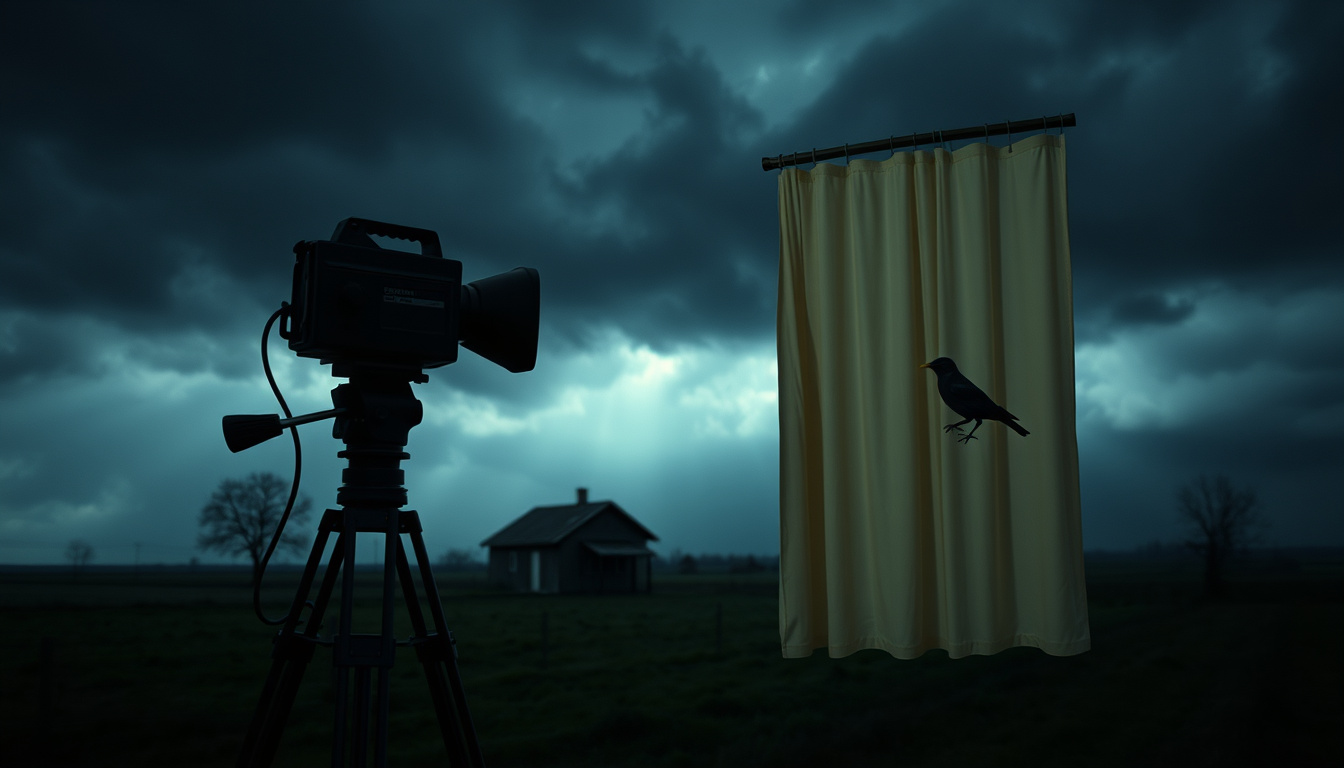

Anyone who has seen Psycho knows the shiver that comes with a shower curtain being drawn. That moment, along with the rest of the film, came from a peculiar collision: a meticulous director with a secret phobia of eggs, and a Wisconsin murderer whose crimes had just been unearthed.
Born: August 13, 1899, Leytonstone, England ·
Died: April 29, 1980, Los Angeles, California ·
Feature films directed: 53 ·
Academy Memorial Award: 1968 (Irving G. Thalberg Memorial Award)
Quick snapshot
- Hitchcock was born in 1899 and died in 1980 (Wikipedia).
- He directed over 50 feature films (Wikipedia).
- He had a well-documented fear of eggs (The New York Times (archived)).
- Ed Gein inspired the character of Norman Bates in Psycho (EBSCO History).
- Whether Hitchcock was faithful to his wife Alma throughout their marriage (Biography.com).
- Whether he intentionally used his phobias as a narrative device or they were purely personal (The New York Times (archived)).
- The exact nature of his relationship with actress Tippi Hedren remains debated (Vanity Fair).
- Whether Hitchcock’s childhood trauma directly caused his film themes is a matter of interpretation (Britannica).
- November 1957: Ed Gein’s crimes discovered (Esquire).
- 1959: Robert Bloch publishes Psycho, inspired by Gein (EBSCO History).
- 1960: Hitchcock’s Psycho released (EBSCO History).
- Hitchcock’s estate continues to license his films and persona for new projects (Wikipedia (Legacy)).
- The 2024 series Monster: The Ed Gein Story includes a portrayal of Hitchcock (Vanity Fair).
- Academics are revisiting the Gein–Psycho connection with fresh archival evidence (Esquire).
Six facts about Alfred Hitchcock form the core of his public biography.
| Attribute | Detail |
|---|---|
| Full Name | Sir Alfred Joseph Hitchcock |
| Born | August 13, 1899, Leytonstone, England |
| Died | April 29, 1980, Los Angeles, California, USA |
| Occupation | Film director, producer, screenwriter |
| Notable Works | Psycho, Vertigo, Rear Window, North by Northwest, The Birds |
| Awards | Academy Memorial Award (1968), BAFTA Fellowship (1971), AFI Life Achievement Award (1979) |
What is the connection between Ed Gein and Alfred Hitchcock?
The link between the two men is indirect but powerful. Robert Bloch, a horror novelist, read about Ed Gein’s 1957 arrest and wrote Psycho, which Hitchcock turned into his most famous film. Hitchcock bought the film rights for $9,000. The film’s protagonist, Norman Bates, shares Gein’s tendency to preserve his mother’s presence, but Hitchcock himself said he never intentionally used Gein as a model.
Hitchcock publicly distanced himself from Gein, yet the cultural atmosphere around Gein’s crimes likely helped Psycho resonate so powerfully. A Kennesaw State University thesis suggests that without Gein’s case, Psycho might not have become the phenomenon it did (Kennesaw State University Digital Commons).
Did Alfred Hitchcock meet Ed Gein?
- No. Hitchcock never met Gein. Gein was committed to a mental hospital in 1958, and there is no record of any contact.
Is Psycho based on Ed Gein?
- Yes and no. Robert Bloch’s novel was based on Gein, but Hitchcock insisted he adapted the novel, not the real case. “First of all, I didn’t know anything about those aspects when I wrote Psycho,” he said. He claimed his interest was in the idea of small-town murders going unnoticed.
Is Hitchcock in the Ed Gein story?
- Only as the director who adapted Bloch’s novel. Hitchcock appears in historical narratives about Gein’s cultural impact, but he was not directly involved in the case or its investigation.
Who plays Alfred Hitchcock in Monster: The Ed Gein Story?
- The 2024 Netflix series Monster features a portrayal of Hitchcock. Actor Tom Hollander has been cast in the role (Vanity Fair).
The pattern: The Gein–Hitchcock connection is a game of telephone—a real murderer inspired a novelist, who inspired a filmmaker, who then claimed ignorance of the original. The result, however, permanently linked the two names in film history.
What happened to Alfred Hitchcock when he was 15?
In 1914, Hitchcock’s father died, forcing him to leave school and take a job at the Henley Telegraph Company (Wikipedia). The loss of his father at such a formative age left a lasting mark on the director. Themes of guilt, punishment, and authority recur throughout his films, from The 39 Steps to Psycho. Biographer Donald Spoto argues in The Dark Side of Genius that this early trauma shaped Hitchcock’s artistic worldview (Britannica).
What this means: The death of a parent during adolescence doesn’t create a murderer, but for a future storyteller, it provided a deep well of anxiety to draw from. Hitchcock turned personal loss into a cinematic language of suspense.
What is Alfred Hitchcock most famous for?
Hitchcock is globally known as the “Master of Suspense,” a title earned through films like Psycho, Vertigo, Rear Window, and North by Northwest. He pioneered the dolly zoom (also called the “Vertigo effect”) and subjective point-of-view shots that placed audiences inside a character’s fear. His iconic cameo appearances—he appears in 39 of his 53 feature films—became a signature game for viewers (Wikipedia).
Psycho alone is considered a turning point in horror. The EBSCO History entry calls it a “significant turning point in the horror genre”. Its release in 1960 changed what audiences expected from thrillers.
Hitchcock’s technical innovations were not just tricks; they forced empathy. By locking the camera to a character’s gaze, he made the audience complicit in the tension. That legacy lives in every modern thriller.
The catch: Hitchcock’s fame rests on his stylistic control, but his personal imperfections—the controlling behavior, the reported incidents on set—complicate the picture. He was a genius, but not a simple one.
Was Alfred Hitchcock faithful to his wife?
Hitchcock married Alma Reville in 1926, and she remained his closest collaborator, editing and advising on all his films (Biography.com). Publicly, the marriage appeared stable. However, Hitchcock’s obsessive attention to certain actresses—especially Grace Kelly and Tippi Hedren—has led to speculation. There is no confirmed evidence of infidelity, but the power dynamics on set were frequently uncomfortable. The full truth remains unclear (Vanity Fair).
The trade-off: Hitchcock’s professional dependence on Alma coexisted with his intense, sometimes possessive relationships with his leading ladies. Whether that amounts to infidelity is still debated, but the emotional impact on those involved is well documented.
What phobia did Alfred Hitchcock have?
Hitchcock had an extreme fear of eggs, a condition sometimes called ovophobia. In a 1963 interview, he described eggs as “revolting” and said the sight of a raw egg made him physically ill (The New York Times (archived)). He also feared the police and authority figures—a detail he wove into his films through wrong-man plots and anxious protagonists.
The implication: Hitchcock’s phobias weren’t just personal quirks; they were creative fuel. His egg aversion never made it onto screen directly, but his fear of authority anchors North by Northwest and The Wrong Man. The man who scared millions was himself easily scared.
Confirmed facts
- Hitchcock was born in 1899 and died in 1980 (Wikipedia (Early life)).
- He directed over 50 feature films (Wikipedia (Career)).
- He had a well-documented fear of eggs (The New York Times (archived)).
- Ed Gein inspired the character of Norman Bates (EBSCO History).
- Psycho was released in 1960 (EBSCO History).
What’s unclear
- Whether Hitchcock was faithful to his wife Alma throughout their marriage.
- Whether he intentionally used his phobias as a narrative device.
- The exact nature of his relationship with Tippi Hedren remains debated.
Quotes from the archive
“I’m frightened of eggs. Worse than frightened, they make me sick.”
— Alfred Hitchcock, in a 1963 interview (The New York Times)
“The key to Hitchcock’s genius is his childhood. The fear of punishment, the loss of his father—those are the seeds of his art.”
— Donald Spoto, biographer, The Dark Side of Genius (Britannica)
“Without Ed Gein’s murderous and taxidermic behaviors, there would be no Psycho in the sense of the film’s cultural formation.”
— Harold Schechter, biographer of Ed Gein, cited in a Kennesaw State University thesis (Kennesaw State University Digital Commons)
The intersection of a privileged English boy’s private anxieties and a Wisconsin murderer’s public atrocities gave cinema one of its enduring benchmarks. For modern filmmakers, the lesson is uncomfortable but clear: great art often feeds on personal fear and real-world horror.
For a deeper look at his full body of work, including his famous cameos and television appearances, explore filmer och tv-program med Hitchcock.
Frequently asked questions
What was Alfred Hitchcock’s first film?
His first feature film as director was The Pleasure Garden (1925) (Wikipedia).
How many films did Alfred Hitchcock direct?
He directed 53 feature films and many short films and television episodes (Wikipedia).
What awards did Alfred Hitchcock win?
He received the Irving G. Thalberg Memorial Award (1968), the BAFTA Fellowship (1971), and the AFI Life Achievement Award (1979), among others.
Why is Alfred Hitchcock called the Master of Suspense?
Because of his innovative techniques in building tension, including the dolly zoom, subjective camera, and meticulous storyboarding (Britannica).
Did Alfred Hitchcock appear in his own films?
Yes, he made famous cameo appearances in 39 of his films (Wikipedia).
What is Alfred Hitchcock’s most famous film?
Psycho (1960) is widely considered his most famous and influential film (EBSCO History).
Was Alfred Hitchcock a good father?
He had one daughter, Patricia, and the relationship was reportedly strained. He was often absorbed in his work (Biography.com).
Did Alfred Hitchcock speak French?
He had some French language ability from his early career in Europe, but his films were almost entirely in English.
Related reading
- Anthony Quinn Biography: Movies, Oscar Wins, Net Worth, and Legacy — another classic film-era figure.
- Stand by Me Cast: 4 Boys, Ages, Then and Now — a look at another enduring film and its actors.
Related stories





Kevin Sullivan covers community events, neighbourhoods and local culture across Canada.